Count Stylptitch’s memoirs
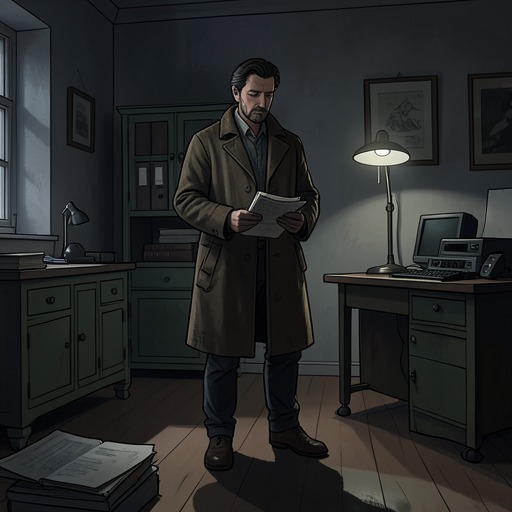
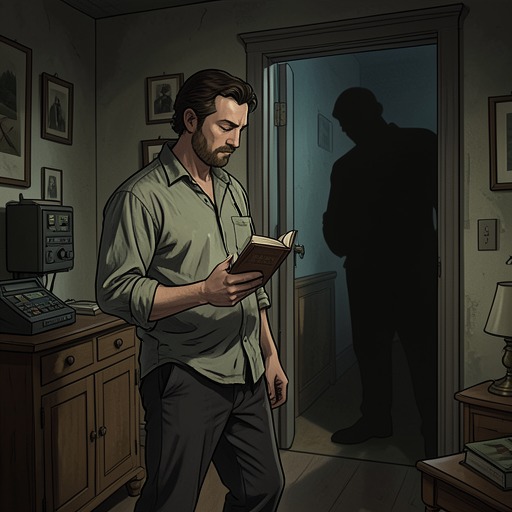
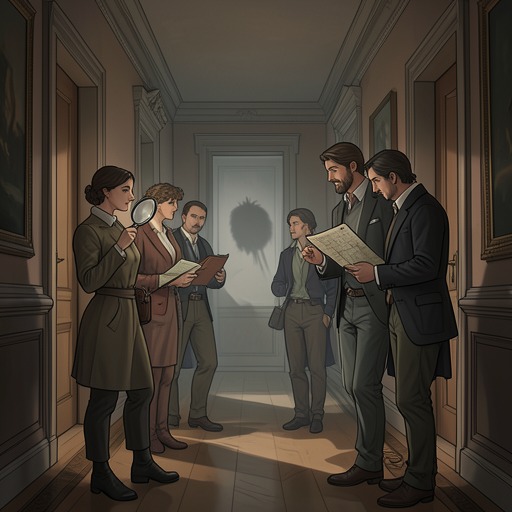
The Secret of ChimneysCount Stylptitch’s memoirs are the posthumous manuscript at the center of a contest over political secrecy and the possible restoration of the Herzoslovakian monarchy. Left in the care of Jimmy McGrath and brought to London by Anthony Cade, they attract rival claimants because the Count was known to possess compromising knowledge and to have promised startling revelations. The manuscript’s significance lies both in what it may disclose and in the uncertainty surrounding its contents: its approaching publication threatens a political arrangement before its readers—or its pursuers—know exactly what the Count recorded.
Origin and entrusted delivery
The manuscript reaches Jimmy McGrath only after a long, indirect passage. About two weeks before explaining the commission to Anthony, Jimmy received a strangely wrapped parcel that had been following him around for an uncertain length of time. He had recently read that Count Stylptitch had died in Paris; the parcel contained the Count’s memoirs or reminiscences, together with a note instructing Jimmy to deliver the manuscript to a London publishing firm by 13 October. If he met that deadline, the publishers were to pay him £1,000.
Jimmy had already arranged to travel to the interior of Africa and regretted abandoning the trip. He nevertheless took passage toward Cape Town, uncertain whether the promised payment was genuine. Anthony’s arrival offered a way to fulfill the obligation: Jimmy entrusted him with the errand, and Anthony came to England in Jimmy’s place. Because the passage had been booked in Jimmy’s name, Anthony travelled as James McGrath, carrying both the manuscript and the borrowed identity that would complicate the investigation around it.
A political document in a succession crisis
The memoirs matter because their publication could disrupt negotiations concerning Herzoslovakia. George Lomax tells Lord Caterham that the issue is not whether the public will read the reminiscences; readers will do so readily. The danger, he insists, is their appearance at a politically delicate moment, when Herzoslovakians wish to restore the monarchy and are prepared to offer the crown to Prince Michael. The British government supports that prospect, while Prince Michael is prepared to grant concessions to Isaacstein and Co in exchange for a loan of roughly a million pounds to put him on the throne.
The succession question gives the manuscript’s possible disclosures immediate political force. After Prince Michael’s death, Superintendent Battle identifies Prince Nicholas Obolovitch, Michael’s first cousin, as the next heir. Battle says there is reason to believe Nicholas had recently been in the United States, raising money on his expectations. Later, Anthony reveals that the report of Nicholas’s death in the Congo was one he had deliberately spread: he identifies himself as Nicholas, explaining that he had emerged from the Congo as Anthony Cade. These facts make the memoirs’ political context more than a dispute over scandal; the manuscript moves through a crisis in which succession, foreign support, and financial arrangements are entangled.
Competing efforts to control the manuscript
The approaches to Anthony begin almost as soon as he reaches London. Still using James McGrath’s name, he goes to the Blitz Hotel intending to deliver the manuscript to the publishers. Representatives of two political parties from the foreign kingdom then make contact: Anthony says one party’s methods are constitutional and the other’s are not, and that he dealt with each accordingly. That night a hotel waiter breaks into his room in an attempted burglary. Anthony does not report the attempt to the police because nothing is taken, but tells the hotel manager; the waiter leaves abruptly during the night.
The publishers subsequently telephone and propose that a representative call to receive the manuscript. Anthony agrees, and the exchange takes place the following morning. He later tells Superintendent Battle that, having heard nothing further, he presumes the manuscript reached the publishers safely. That apparent delivery does not settle the matter. A man identifying himself as Mr Balderson of Balderson and Hodgkins presses Anthony to hand over the manuscript as quickly as possible, claiming that trouble is coming and that the publishers want copies made in case the original is destroyed. The urgency of this request, alongside the attempted hotel burglary and the political approaches, turns the delivery into a struggle over custody rather than a routine publishing transaction.
The Baron also confronts Anthony with the assumption that he has the memoirs. When Anthony asks what the Count’s memoirs have to do with Prince Michael, the question exposes the link between the manuscript and the political crisis without resolving what the pages contain. Later, Anthony tells Battle that he intends to do everything he can to recover the missing memoirs before the following Wednesday. He suspects that King Victor and his associates may have obtained the letters, but the evidence presented here leaves their possession of the manuscript uncertain.
What the Count may have recorded
The Count’s reputation explains why so many parties fear or seek the memoirs. The French investigator describes him as a man who collected secrets and had more than one means of exerting influence. He reportedly boasted that he could make damaging information public if he chose, and on at least one occasion declared that he intended to include startling revelations in his memoirs. The investigator therefore connects the general anxiety to seize the manuscript with the Count’s own stated intention to disclose secrets.
One possible source of such leverage concerns Queen Varaga. Anthony recounts that she had begun as a Paris music-hall performer, was presented as possessing Romanoff ancestry, and married Nicholas IV before being crowned queen. The monarchy’s claim to popular acceptance remained contested; public discontent and suppression preceded an uprising that stormed the palace, killed the king and queen, and proclaimed a republic. The Count may have known where the missing Herzoslovakian diamond had been hidden: the investigator reasons that, if he had discovered its location, returning it anonymously would have been difficult, while keeping that knowledge would have given him leverage over the Queen. He also notes the Count’s broader accumulation of secrets and his plans for revelations. Battle, however, cautions that there is no real reason to believe the Count knew this particular secret. The memoirs’ danger consequently rests in a credible history of political knowledge, not in proof that any specific disclosure appears in the manuscript.
Narrative function and unresolved contents
The memoirs operate in the plot as an object whose contents remain less accessible than the consequences attached to it. Jimmy’s commission gives Anthony a concrete deadline and payment, while the manuscript’s route through a parcel, a hotel room, a supposed publisher’s representative, political emissaries, and police questioning repeatedly places its custody in doubt. Each attempted transfer raises the same question in a new form: whether the manuscript is being delivered, copied, hidden, or seized.
That uncertainty also links the private history of the Count to the public struggle over Herzoslovakia. The manuscript may expose secrets capable of upsetting a restoration project backed by the British government and financed through a proposed loan; at the same time, the Count’s known appetite for political secrets makes silence about its exact contents dramatically consequential. Anthony’s later admission that he is Prince Nicholas deepens the succession stakes surrounding the missing pages, but it does not establish what the memoirs say. The object remains powerful precisely because its readers and pursuers act on what it might reveal before the narrative confirms the full contents of the manuscript.